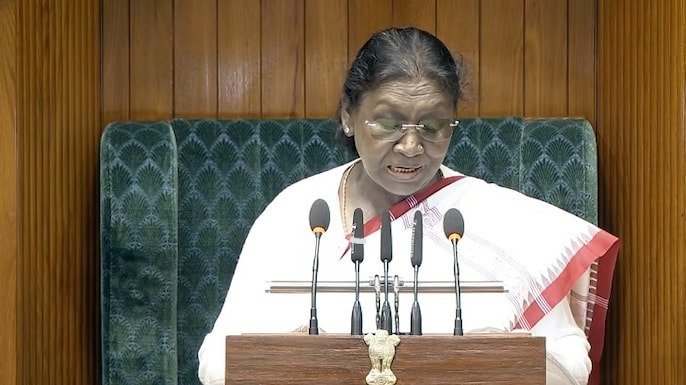
New Delhi: India’s Parliament Budget Session 2026 officially commenced on Wednesday with President Droupadi Murmu addressing the joint sitting of the Lok Sabha and the Rajya Sabha. As per parliamentary tradition, the President’s address marked the formal beginning of the crucial budget session, outlining the government’s achievements, policy priorities, and roadmap for the upcoming financial year.
During her address, President Murmu highlighted the government’s focus on economic growth, social welfare initiatives, infrastructure development, and governance reforms. The speech set the tone for legislative discussions and debates expected throughout the session.
Budget Session Schedule and Key Dates
The first phase of the Budget Session will run from January 28 to February 13, 2026, while the second phase is scheduled between March 9 and April 2, 2026. Following the President’s address, regular parliamentary proceedings will begin in both Houses.
The Economic Survey 2026 will be tabled in Parliament on January 29, providing a detailed assessment of India’s economic performance over the past year. Subsequently, Union Finance Minister Nirmala Sitharaman will present the Union Budget 2026-27 in the Lok Sabha on February 1, 2026.
Focus Areas of the Budget Session
During the Budget Session, extensive discussions are expected on key issues such as economic policy, taxation reforms, public expenditure, infrastructure investment, and social welfare schemes. The budget will play a decisive role in shaping India’s economic direction forhe financial year 2026-27.
Political Debate and Opposition Strategy
Opposition parties have prepared to corner the government on multiple national issues, making heated debates and disruptions likely during the session. Political observers anticipate intense exchanges in Parliament, given the significance of the budget and its long-term economic impact.
Why Budget Session 2026 Is Crucial
Considered one of the most important parliamentary sessions of the year, the Budget Session 2026 will determine the government’s fiscal priorities and development agenda. With economic growth, inflation control, and welfare spending in focus, the outcomes of this session are being closely watched across the country.