
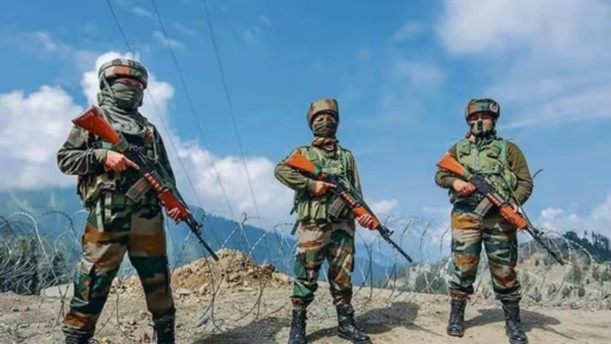
Intelligence agencies have alerted security forces that more than 30 Pakistani terrorists are currently active in the Jammu region, pushing the Indian Army and other forces to step up winter counter-terror operations in snowbound mountain terrain.
With harsh winter conditions and heavy snowfall under “Chillai Kalan”, the traditional 40-day coldest period in Jammu & Kashmir, security forces are executing aggressive search and surveillance missions across high-altitude areas of Kishtwar and Doda districts. Rather than reducing activity because of the cold, the Army has expanded its operational reach to ensure militants do not exploit weather conditions to hide or regroup.
Winter-Phase Counter-Terror Strategy
According to defence sources, the terrorists have shifted into remote mountainous zones where civilian presence is minimal to evade detection. To maintain constant pressure on these groups, the Army, backed by Jammu & Kashmir Police, CRPF, BSF, Special Operations Group (SOG), Forest Guards and Village Defence Guards, has established temporary forward posts, surveillance camps and patrol routes in snow-covered terrain.
Highly trained winter warfare units are involved in systematic searches along ridgelines, valleys and dense forests using advanced technology like drones, thermal imaging and ground sensors to track possible terror hideouts and movement.
Officials say that continuous pressure, alongside drying local support networks, has forced militant elements deeper into inhospitable mountains, further isolating them from potential support bases. Security forces are conducting coordinated surveillance-sweep-surveillance cycles to ensure that cleared areas remain monitored and terrorists are denied any safe sanctuary.
The objective of these intensified operations is not only to locate and eliminate remaining terrorist pockets, but also to prevent any possible regrouping or infiltration into populated zones during winter when harsh conditions could otherwise be used as cover by terror groups.