
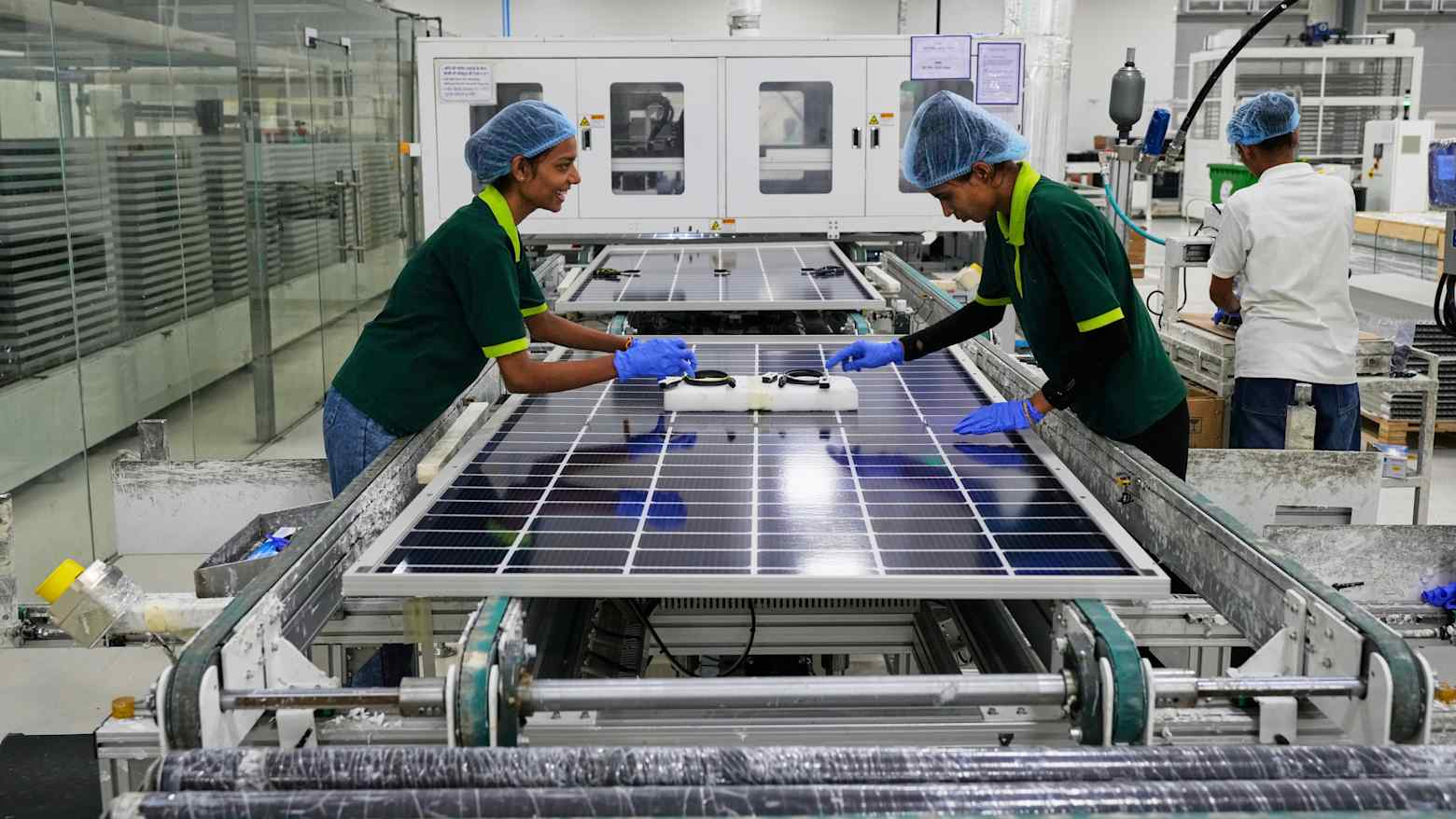
Washington, February 25, 2026: The United States Commerce Department has announced preliminary countervailing duties of 126 percent on solar panels and cells imported from India as part of a broader trade action targeting alleged government subsidies that give foreign manufacturers an unfair advantage in the American market.
The decision, which also includes duties on solar imports from Indonesia and Laos, aims to protect domestic solar producers but has sparked uncertainty among global trade analysts and renewable energy developers.
High Duties Cited on Subsidized Solar Imports
As per the US Commerce Department’s preliminary findings, solar imports from India have been subject to high subsidy rates, prompting a 125.87 percent duty to offset the alleged market advantage. Similar levies include:
- 104.38 percent on Indonesian imports
- 80.67 percent on solar panels from Laos
The levies are part of an ongoing investigation into whether government incentives enabled these exporters to undercut US manufacturers.
Impact on Industry and Trade
According to trade data, India, Indonesia, and Laos together accounted for nearly two-thirds — roughly $4.5 billion — of solar imports into the United States in 2025.
Industry analysts say the high duty rates could make the US market largely inaccessible to manufacturers from these countries, potentially raising costs for American renewable projects that depend on imported modules.
The moves follow similar patterns of trade protection in the solar industry, as decades of low-cost imports have challenged US producers. Groups representing domestic manufacturers have supported the action, saying it is needed to create a level playing field and safeguard jobs.
Political and Trade Context
This announcement comes amid broader shifts in US trade policy. Some prior Trump administration tariff plans were invalidated by the US Supreme Court, leading policymakers to explore alternative legal routes for imposing import duties.
Despite expectations that duties might ease under negotiated trade frameworks, the countervailing preliminary tariffs reflect ongoing tensions between supporting local manufacturing and maintaining access to affordable renewable technology.
The Commerce Department is expected to release a final determination later this year, which could further influence the industry and bilateral trade dynamics.