
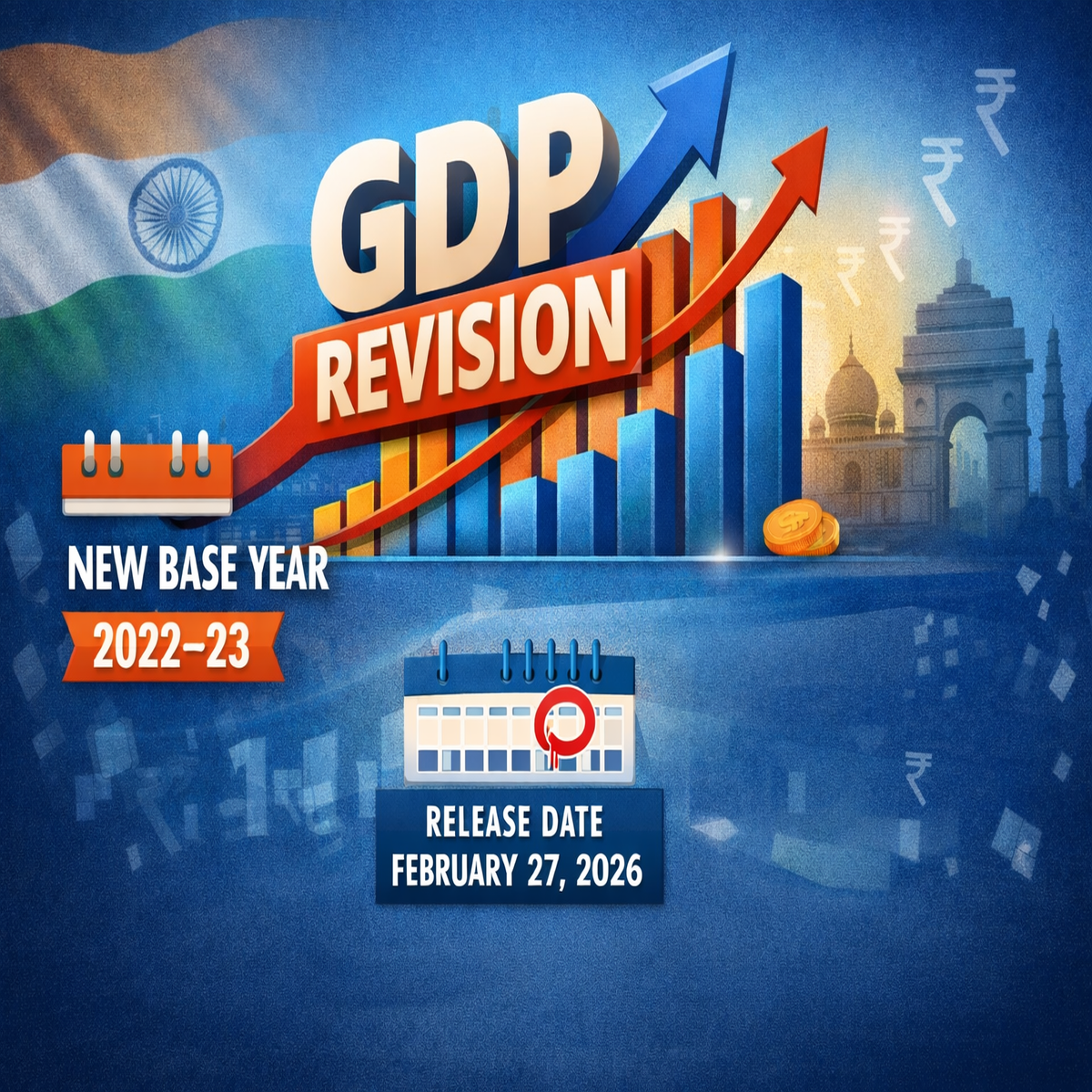
New Delhi, February 26, 2026 — India’s Ministry of Statistics and Programme Implementation (MoSPI) is set to release a revised Gross Domestic Product (GDP) series with 2022-23 as the new base year, replacing the outdated 2011-12 framework. This significant shift will incorporate recently available data sources such as Goods and Services Tax (GST) returns, domestic services and other modern sectors to more accurately reflect the current structure of the Indian economy.
The updated GDP series will be released on February 27, 2026, and includes back-series data for previous years, enhancing comparability and measurement precision. Analysts say this revision marks a major improvement in India’s national accounts, aligning statistical methods with contemporary economic dynamics and reducing reliance on old proxies.
Why the Revision Matters
The previous base year of 2011-12 had been in use for over a decade and was widely viewed as outdated, with critics noting that it failed to capture large structural changes in the economy — including the rapid expansion of services, digital commerce, electric vehicles (EVs), GST implementation and other new segments. Under the new methodology, GST data will play a larger role in GDP estimation, particularly for private corporate sector output and quarterly national accounts, improving the reliability and timeliness of growth figures.
Officials have said that integrating GST returns and other administrative datasets allows better allocation of Gross Value Added (GVA) across states and sectors, thereby reflecting real-world economic activity more accurately. This will particularly help in measuring output of domestic services — such as professional services, transport, hospitality and digital platforms — which have grown significantly in recent years.
Expected Impact on Growth Estimates
The revised base year could change headline GDP growth figures compared with the old series, potentially showing different rates for recent quarters and years. Finance and economic research institutions — like the State Bank of India — have indicated that broader data inclusion may lead to upward revisions in quarterly growth estimates.
Economists believe this overhaul will provide a clearer and more credible picture of India’s current economic performance, aiding policymakers, investors and analysts alike. It also responds to international recommendations that called for more up-to-date statistical practices and deeper use of administrative data sources.